
The return of the Mana series is something that cannot go unnoticed by RPG fans. That’s why we wanted to keep talking about it despite having our review already published. Thanks to Square-Enix and Plaion, we have been able to approach the team members responsible for Visions of Mana, who tell us development details and how they have lived from their side this important event. Masaru Oyamada (Mana series producer), Ryosuke Yoshida (director of Visions of Mana. In charge of in-game mechanics designs such as battles, levels, game cycles, game performance etc) and Kenji Ozawa (director of Visions of Mana. In charge of game system/UI, scenario flow, cutscenes/event scenes, scenario/text writing) have been kind enough to give us a few minutes of their time. Thank you very much!

RPG Spain: Visions of Mana is the first major release of the saga in 15 years, when was the project born? When and how was the decision made? How about your thoughts when you were told this project was going to be real?
Masaru Oyamada: When I took over as series producer, it had already been seven years since the last new game, but the past titles were also no longer available to play on modern generation hardware either. Because of this, I initially decided to focus on remakes and remasters, while also looking at the right timing to release a new Mana game and the direction to take it in. After Trials of Mana was released, we did a player survey, and there were many fans calling for a new entry in the series, so we decided to set to work on what became Visions of Mana around then. In terms of my feelings about the project, I was highly motivated and elated that we were finally able to work on a new game for home consoles.
RPG Spain: Finding a balance between keeping the classic elements of the saga and looking for something more contemporary, would you say it has been difficult? What is the biggest challenge you have faced doing this game?
Masaru Oyamada: We did have to deal with evolution on the technology side too, but with the level of expectation towards a completely new Mana series title, the initial difficulty we felt was in working out where to draw the line on what to put in or not. The visuals had to be right of course, but there are a great many elements from the past Mana games which people found fun, so we wanted to squeeze in as much as we could. There were a lot of hurdles to clear if we were to do that, with scheduling and the like. However, I think that we were able to proceed without much worry once we had established the idea of the elementals as the key concept to inform the whole development and tie together the visuals and the action elements
Ryosuke Yoshida: We needed to create the battles and gameplay systems in a way that would be fun for action game fans, but also consider a wide variety of players, including younger gamers too. I would say that was what I found the biggest challenge. If we went for a very simplistic system then it would lose depth and replay value as a game, and everyone would think that we were just prioritising giving the development team an easy life and not taking the player into consideration. To avoid players feeling that way, we made sure that the elements which were kept simple all had solid reasons to be that way and convincing background to anchor them in the setting. For example, having eight elemental vessels and eight classes because their powers derive from the eight elementals themselves.
Kenji Ozawa: Thinking of how to add all the elements that should be present in modern games in a way that fit with the Mana series atmosphere and setting and tied to the characters was tricky, but at the same time great fun. The world map that the player explores is vast, so we structured the gameplay on it to provide the convenient features that modern players look for today, but I remember that the subtle tweaks and adjustments needed to tie this functionality to classic characters from the series, such as Li’l Cactus and the Dudbears, went on right to the end of development and was pretty hard work. This was probably because imagining the delighted faces of the series’ fans in my head only made me want to add in more and more both new and familiar characters and more gameplay elements. However, if we made things too complicated then it would actually put players off an make it harder for them to get into the game.

RPG Spain: What aspects or features would you say are indispensable in any game of the saga? If you don’t have this, it’s not a Mana game.
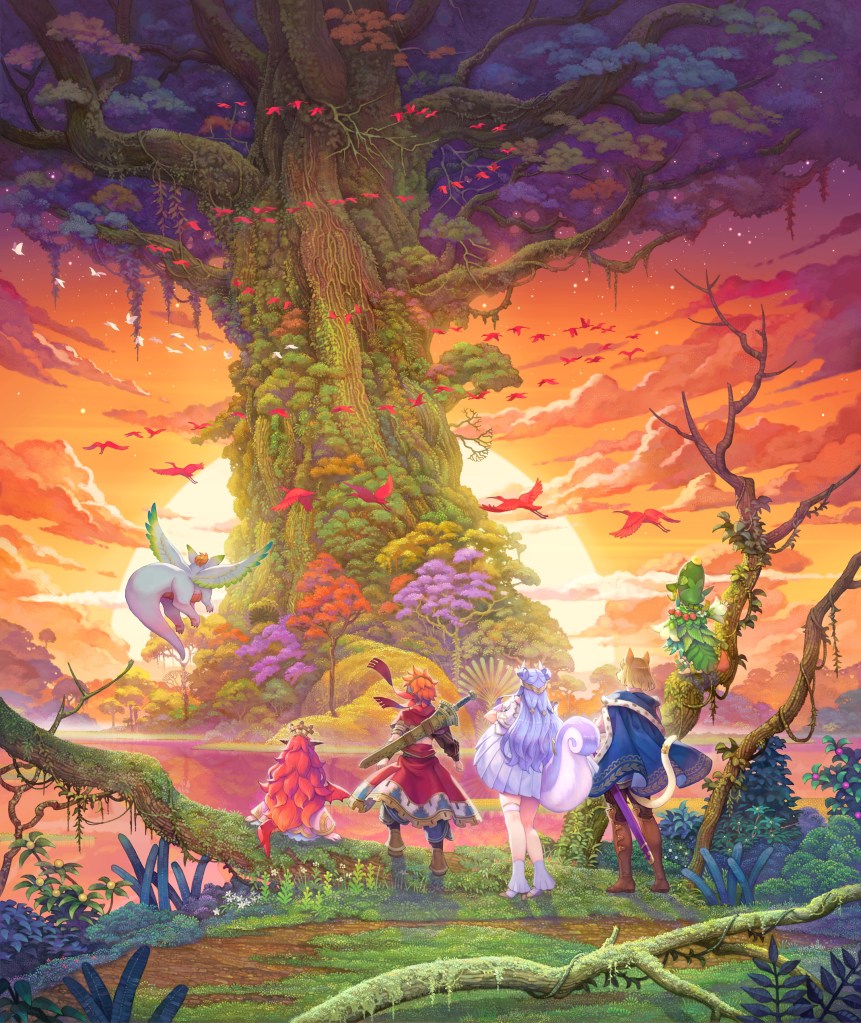
Masaru Oyamada: I think that the essential elements of a Mana game are the Mana Sword, the Tree of Mana and the presence of the unique monsters and characters designed by series founder Koichi Ishii. Accordingly, when we first began work on the game, I felt that as long as we could take the classic Mana Tree image drawn by Hiroo Isono (the artist responsible for the key art on numerous Mana series titles), the characters designed by HACCAN and the monsters created by series founder Koichi Ishii and bring them up to date, the visual side would naturally and convincingly look like a Mana game. On the other side of that, the design of the gameplay systems over the series history has had incredible creative freedom and imagination, so it made us want to try out bold new challenges with Visions of Mana. However, we also felt we needed to reign that in and made the core systems relatively familiar and reassuring, as it was the first new mainline Mana game in a long time. From my perspective, I felt that we should definitely try out all kinds of different ideas, but keep the game based firmly in the familiar action RPG genre the series has always existed in, and that is how it took shape.
RPG Spain: This should have been Seiken Densetsu 5, right? Was it unnumbered for some special reason?
Masaru Oyamada: Outside of Japan, the series has never used the numbers and always just had titles structured as “XX of Mana”, so for this game that was being launched globally, we thought we would align it with the convention from outside of Japan and go with just “Visions of Mana”. We very much saw the development as a main-line entry in the series, treating it as “Seiken Densetsu 5” from the start, but we decided to drop the numbering in the titles going forward to make the naming consistent across all regions.
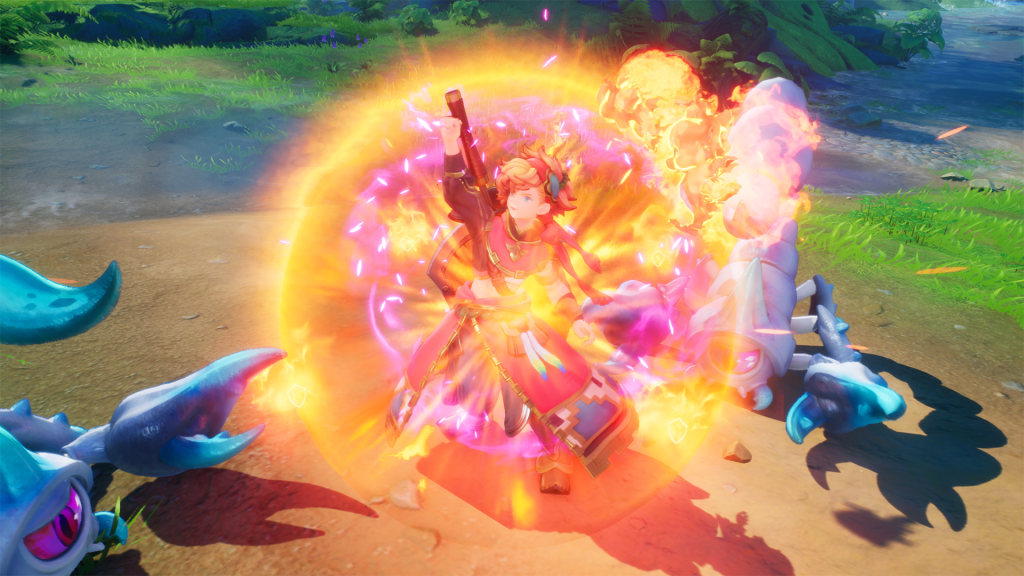
RPG Spain: The battle system feels renewed and much more complete as well as fun. what was your priority when implementing this system?
Ryosuke Yoshida: Hearing that makes me very happy indeed. What was important when considering how to create the battle system was not to look at it in isolation from the rest of the game, but to tie it firmly to the core concepts in the game overall. To get that right, I first thought about what the core elements across the Mana series were. The idea of interacting with the elementals is something that runs through the whole series and cannot be excluded from it, so I really focussed on making the player feel that relationship with the different elementals during battle. The way we achieved this was through the elemental vessels that are at the heart of the battles in Visions of Mana, and incorporating these was the top priority.
RPG Spain: Which «jobs» do you find most useful or fun to play? If you can, tell us which is your favourite character in the party and why?
Masaru Oyamada: I like the way Julei swings his hammer around, so it is probably his “High Cleric” light element class for me. It feels great to use the Lumina Lantern to chain damage, then wade into a cluster of enemies swinging the hammer to batter them. Julei’s light class is also good at healing, so it is reassuring to have him along to stabilise the party. I like his personality throughout the game as well.
Ryosuke Yoshida: The class and character combination I personally like best is Palamena’s “Archmage” light class. Firstly, the Lumina Lantern creates a very powerful effect if you consider the right target to use it on and what other elemental vessels and moves to combine it with. In that sense, all character’s light classes are really useful. Palamena’s light class in particular lets you learn a well-balanced variety of enhancements, so I would recommend it. More than anything though, the outfit just looks so cute!

Kenji Ozawa: I am actually not all that good at fast paced action games myself, so Val’s “Duellist” water class is a class I particularly like because it lets you freeze enemies without using special abilities. My favourite character is… a really difficult question, but I would probably say Careena. In some scenes from the early part of the story she is quite cold towards Val, so I was really worried about whether players would accept her, but her appearance and the way she speaks seem to be very well regarded, so it is reassuring to see the love that the development team had for her has been transmitted to the fans.
RPG Spain: Avoiding spoilers, I think the plot(story) is one of the best in the whole series, and some cutscenes are gorgeous. Why the decision to focus more on the plot in this release?
Kenji Ozawa: I feel that a big factor in this is how the Mana series remakes that Mr. Oyamada has overseen since 2016 have shone a light on not just the appeal of the amazing settings and stories that the series always had, but also its great characters, which have been reborn in an even more beautiful form thanks to the efforts of the artist HACCAN.
I hope to see players notice all the emotional changes in the characters throughout the story, as well as finding out how the world came to be the way it is and see where it is going, and for that to leave a lasting impression on them. The storyline and how the characters are depicted in cut scenes were changed to give them the stronger emphasis that they deserved after thinking about how we wanted players to come to like these characters after finishing the game.
RPG Spain: What would you like to say to convince players who were aware of the Mana series but never fully played it, to play Visions of Mana?
Masaru Oyamada: I would like to say that anyone can play Visions of Mana, even if this is your first Mana game!
There are probably people out there with an image of the Mana series having a long history and being difficult to get into unless you start at the beginning, but Visions of Mana has been developed with a focus on being easy and accessible to play, so that anyone can play, even if they know none of the previous Mana games at all. I hope that people can casually give it a try and they really don’t need to be concerned about just jumping in. Of course, we have also put in a lot of things that will remind long-term Mana fans about the best bits of the previous games, so I would be delighted to see people using Visions of Mana as springboard to go back and enjoy the whole of the series to date.
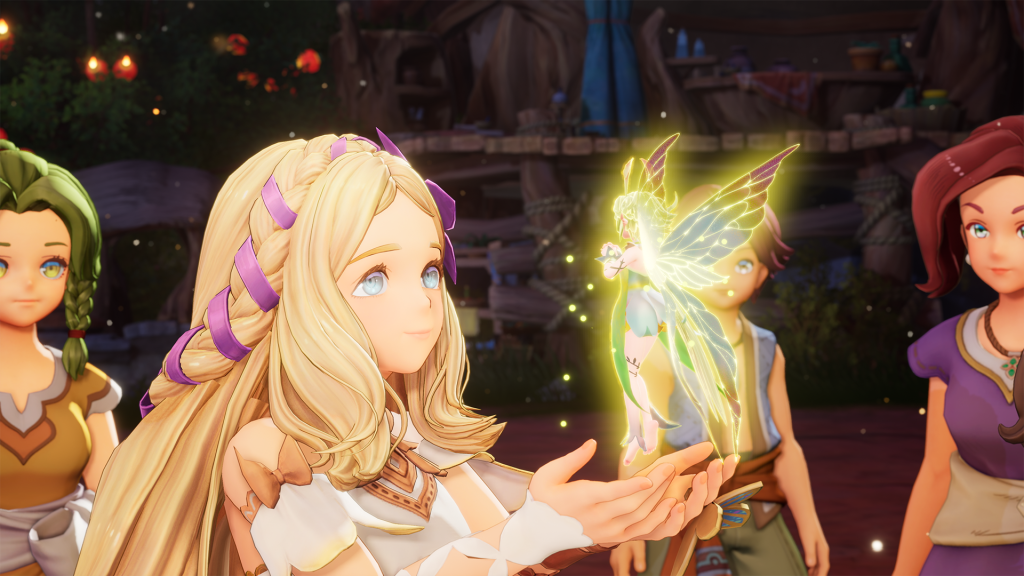
Ryosuke Yoshida: The characters and worlds that appear in the Mana series are definitely cute, but they are also depicted in a really unique way, which I think makes them feel new in a certain sense. When we were making Visions of Mana, we strived to put those original elements of the visual design into the game, while also making sure that it would be accessible and easy to play for a wide range of players and age groups. I think the finished product is easy to pick up for people who are new to the Mana series and you can see its quality at a glance, so I hope people give it a try.
Kenji Ozawa: I think that any series that has a large back-catalogue of titles will see people unsure where to start from, but personally, I would just like to say that “I want you to play Visions of Mana first!”. From the fairytale plants gently swaying in the wind to all the loveable monsters and the sense of the elementals living all around, this game brings the most immediate and vivid portrayal of the unique world of Mana and its fantastic sense of being surrounded by the beauty of nature, with the power of mana flowing through it. You can experience a true sense of and have a real adventure in this game’, but I personally would like you to simply ‘visit and see this magical world we created’.
RPG Spain: How have you felt the reception from the fans? Is there anything about the game that you would change now?
Masaru Oyamada: I was delighted to hear from fans who had only previously played specific games in the series, how they felt that Visions of Mana really captures the distinctive essence and atmosphere of the Mana games. In terms of what I would alter, I feel that we pulled out all the stops did a solid job, so there is nothing in the game’s content I would want to change, but I do think it would be great if we could have put even more gameplay features in, as well as have the game support more languages and add in other things that would please the fans. It is just the nature of working in game development that there is no limit to what we want to add to make the game even better.
Ryosuke Yoshida: We were all extremely happy and proud of Visions of Mana so there are no areas of the game I have regrets about and want to change massively, but I have been watching the fan reactions on social media around release and from the surveys we did. I would like to do something to reflect such feedback mentioned and add in extra things to please people who have already played the game (such as adding languages that are currently not supported or more post-completion content etc.).
In terms of the specific fan reactions, we received comments from all over the world saying how the game felt nostalgic and really captured the classic feel of a Mana game. This brought home how the Mana series is loved around the world and made me realise what an important title I have had the honour of being involved with. There are many extremely positive user reviews on Steam and Metacritic from people who have actually bought the game, which are a great relief to see, and I sincerely thank everyone who wrote them. Arigato gozaimasu!
Kenji Ozawa: From all the warm comments we received, both myself and the team as a whole have felt the massive love the fans have for the series, and the anticipation towards getting a new title after so long. That they picked up on so many small details, from the minor, throwaway lines the characters say to the NPC dialogue in towns, made the time we took to create it all feel worth it. In terms of changes, personally I would have liked to add in more devices to make the players warm to characters from the previous era of the world, such as Eoren and Daelophos. The Mana series always deals with themes of “parting”, so I wanted to show that aspect a little more.
 RPG Spain
Un comentario sobre “Interview Visions of Mana”